


Roses are popular garden plants with a cultivation history dating back 5,000 years! Although they delight us with their beauty, growing them can be a challenge even for experienced gardeners. In this article, you will learn how to care for roses so you can enjoy their appearance and fragrance for as long as possible, and you will also learn about the most important rose diseases and pests.
The history of garden rose cultivation
The rose is one of the longest-cultivated plants. Its history dates back about 5,000 years and began in China. At first, it served as a medicinal plant, but it quickly became a prized ornamental plant. Its peak of popularity in Europe came at the turn of the Renaissance and Baroque periods. It was then that Italian aristocrats competed in cultivating roses, which served as a symbol of wealth and luxury. In the 19th century, rose cultivation gained momentum, only to explode in the 20th century with a multitude of varieties, and consequently, a wealth of colors, sizes, and shrub shapes. Thanks to the emergence of new technical capabilities, many valuable varieties were created that are still used in gardening today.
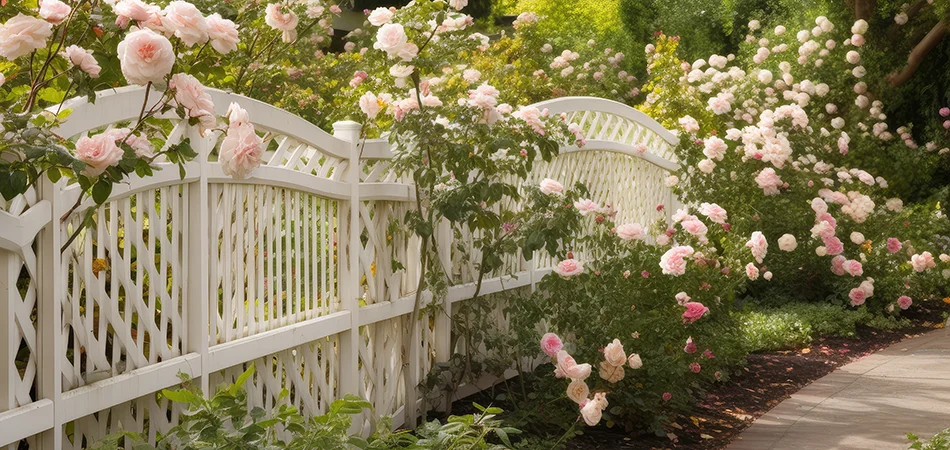
How to care for garden roses?
Thanks to the efforts of breeders, a huge number of phenomenal, ornamental rose varieties have been created, yet the rose's requirements have remained unchanged. To enjoy healthy, profusely flowering shrubs, you need to remember a few simple rules.
The classic care regimen for a garden rose includes fertilizing the shrubs throughout the growing season with a multi-component fertilizer containing, in addition to basic biogenic elements such as nitrogen, potassium, and phosphorus, also iron, which is crucial for the health of a garden rose. In addition, to avoid fungal diseases, we should perform regular pruning from late spring to the end of summer. We should also prune roses after the flowers have faded to stimulate them to bloom longer and more abundantly.
However, I personally allow roses to fade slowly and form hips, which also serve a decorative function, especially in late autumn when they turn red against the background of brown stems. These left-behind hips also provide a food base for birds and other creatures inhabiting our gardens, which supports the biodiversity of our gardens.

Garden roses – what are the pests and diseases of roses?
The most important rose pests include:
- aphids, which are small insects that feed on leaves, suck out juices, and weaken the shrubs; they are sometimes also vectors of plant viruses,
- rose leafhoppers are insects that, like aphids, suck juices from leaves, causing them to yellow and dry out,
- spider mites, which are tiny arachnids living on the underside of the leaf blade, usually causing leaves to curl and dry out, as well as weakening the plant.
Pests occurring on roses not only cause direct losses resulting from feeding on leaves, flowers, and stems, but by damaging tissues, they can create entry points for infections and make it easier for the plant to be affected by fungal diseases.
Garden roses can be attacked by various fungal diseases. Their occurrence is usually favored by insufficient pruning, improper site selection, and warm, humid weather.
The most important rose diseases are:
- black spot,
- powdery mildew,
- downy mildew.
Black spot on roses
Black spot of roses, *Diplocarpon rosae*, is one of the more common diseases appearing on ornamental varieties. As the name suggests, it manifests as black, round discolorations on the upper side of the leaf blade, which over time merge into larger spots, leading to yellowing and shedding of leaves. Sometimes symptoms may also occur on the hips.
With severe infection, black spot can lead to total defoliation of leaves, and consequently, the death of the shrubs. It can also contribute to roses being more susceptible to frost, as affected leaf blades produce fewer assimilates, which weakens the condition of the entire plant.
To effectively combat black spot, one should avoid large-flowered rose varieties, which are most susceptible to this disease, and instead plant cluster-flowered roses and shrub roses. In addition, it is important to remove affected stems and fallen leaves, which constitute a source of infection in the next growing season.
High density and moisture lingering on the leaf surface for a long time also favor the development of the disease, which is why we should avoid heavy overhead watering of entire plants and opt, for example, for drip irrigation, as well as perform pruning that facilitates air circulation and avoid planting shrubs too densely.
Powdery mildew on roses
Powdery mildew of roses is a fungal disease caused by *Podosphaera pannosa*, manifesting as a white coating on the upper surface of the leaf blade, flower stalks, and sometimes also on the stems. This species can also attack forsythia, cherry laurel, black cherry, and smoke bush.
Infection is favored by high air humidity reaching 90–100%, as well as warm weather. Conidial spores of the pathogen are easily carried by the wind, which is why we cannot completely prevent its occurrence. To limit powdery mildew on roses, we should remove rose buds, which constitute a source of the pathogen in the next growing season.
Downy mildew on roses
Downy mildew is the third most common garden rose disease, caused by *Peronospora sparsa*. Unlike the previous two, it is not caused by fungi, but by oomycetes. Symptoms begin on the underside of the leaf blade.
Whether the disease takes the form of an epidemic depends mainly on the variety and weather patterns, as *P. sparsa* needs humid and warm weather to cause infection. Usually, however, the disease has a mild course and does not require chemical control in amateur cultivation. Instead, we should focus on removing affected parts of the plant and thoroughly raking up fallen leaves, which, as with the two previous diseases, constitute a source of the pathogen in the next growing season.
Garden roses – how to choose the best variety?
Currently, we have access to thousands of varieties of climbing, large-flowered, cluster-flowered, and miniature roses. Such great diversity means we may have trouble choosing the best variety.
The basic rules we should stick to when choosing are to match the variety to habitat conditions, such as sunlight or protection from the wind.
For example, large-flowered roses require protection from the wind, and in places exposed to this factor, they can easily freeze.
On the other hand, groundcover roses are great for more difficult conditions and can be successfully planted on exposed slopes or other demanding places.
When choosing a variety, it is also worth being guided by aesthetic considerations and matching the rose to the style of our garden. In naturalistic gardens, a wild rose will definitely work better, and in formal gardens, where we focus on the representative role of plants, we can opt for impressive large-flowered roses.
You will find the most beautiful T-shirts, sweatshirts, and mugs with rose motifs at Botaniki
As a true rose lover, you know that their cultivation can be difficult and does not always bring the intended result, but all is not lost! At Botaniki, you will find clothing, bags, posters, and mugs with the most beautiful rose varieties that will never fade. Our graphics have been created with the utmost care so that you can enjoy their beauty every day.
SOURCES
Kryczyński S., Weber Z. (eds.). 2011. Fitopatologia, vol. 2. Choroby roślin uprawnych, Poznań: Powszechne Wydawnictwo Rolnicze i Leśne, pp. 368, 369.
Babelewski, P. 2017. Ozdobne z natury: róża dzika. Szkółkarstwo, (1).
Monder, M. J. 2010. Cenne róże historyczne [part I]. Szkółkarstwo, 4, 18.
Szulc M. 2013. Teoretyczne i praktyczne aspekty ekologicznej ochrony roślin ozdobnych. Journal of Research and Applications in Agricultural Engineering, 58(4), 179-182.
Sosnowska D. 2019. Grzyby pasożytnicze i antagonistyczne w biologicznej ochronie roślin w Polsce. Progress in Plant Protection, 59(4).
Kuntze R. Przegląd szkodników z rzędu chrząszczy.