


Polish Christmas traditions are remarkably rich. This is due, among other things, to the blending of two cultures - pagan and Christian.
Plants have always been an inseparable element of numerous folk and religious customs. They possessed not only a utilitarian or aesthetic character but also a symbolic one. Thanks to this, many symbols originating from pagan beliefs have survived in Christian Christmas tradition as well. Under the influence of the new culture and faith, existing plant symbols modified their meaning and symbolism to varying degrees. Over time, the boundary between the traditions blurred to such an extent that it is now imperceptible.
Regardless of the origin of the symbolism, plants still play a significant role during Christmas today.
Poppy - genus Papaver L.
Papaver is a genus that includes annuals, biennials, and perennials.

The height of the plants is usually between 30 and 120 cm. A characteristic feature is the fruit - a multi-seeded capsule visible after the multicolored flowers have wilted. Poppies contain a milky sap ranging in color from white to yellow, rich in numerous alkaloids, including substances with narcotic effects.
In Christmas Eve tradition, poppy seed dishes have a symbolic dimension. It is a symbol of abundance, wealth, fertility, and prosperity, due to the enormous number of seeds produced by this plant. It was believed that the activity of supernatural beings and spirits increased during the Christmas holidays. Poppy seeds were used as protection against them; they were scattered before the entrances to farm buildings, and talismans were made from the seed pods themselves.
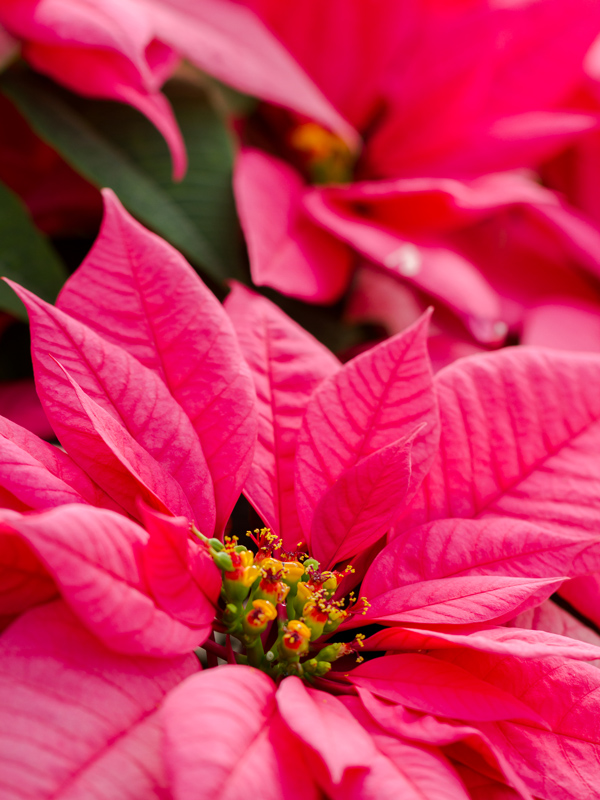
Poinsettia (Christmas star)
The proper name for the Christmas star is Euphorbia pulcherrima, but colloquially we also call it the poinsettia.
This plant originates from South America. Thanks to the first United States ambassador to Mexico, it made its way first to North America and then to Europe. It owes its attractive appearance to bracts, which are the leaves located just below the flower. The inflorescence itself is small, petal-less, and not visually appealing.
In Christmas Eve tradition, it fulfills the symbol of the Star of Bethlehem that guided the Magi of the East to Bethlehem. Interpretations of this phenomenon vary, but an exceptionally interesting one is the hypothesis of British researcher C. J. Humphreys, according to whom this role was originally played by a comet that appeared in the sky at the turn of March and April of 5 B.C. and was visible for over 70 days.
As one of the largest online florists – Euroflorist – which offers Christmas flowers for delivery, also reveals, the potted poinsettia is an absolute bestseller. Even though they are available in many color variants (e.g., white, pink), Poles still most eagerly reach for the classic, timeless red.
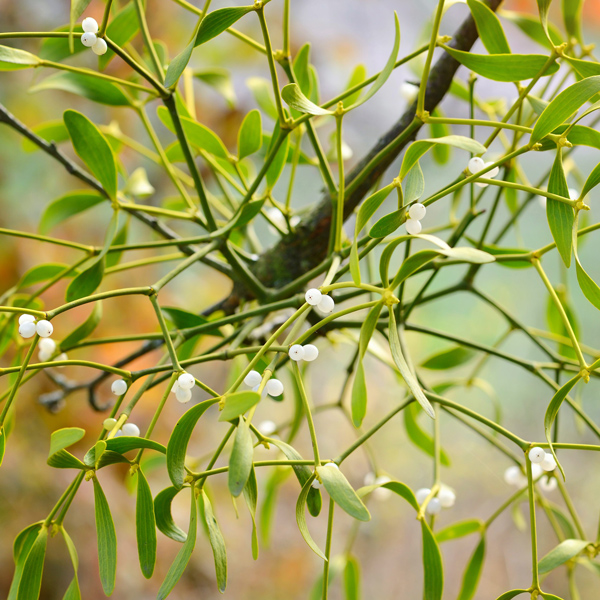
European mistletoe (Viscum album L.)
European mistletoe (Viscum album L.) is an evergreen hemiparasite. This means that while parasitizing trees, it only takes minerals and water from them, and produces products of photosynthesis itself, thanks to the chlorophyll contained in its tissues.
Mistletoe spreads with the help of waxwings and mistle thrushes - birds that eat its fruit. It is common throughout the country on many species of deciduous trees and is increasingly appearing on coniferous trees as well. The exception is native oak species, on which this hemiparasite has not been recorded.
According to the proverb "Without mistletoe, the year is bare," sprigs of European mistletoe were hung from the ceiling at Christmas to bring happiness and prosperity to the household. Mistletoe was used by various European peoples for religious as well as medicinal purposes. The ancients considered mistletoe the "magic plant of Persephone," which was supposed to open the gates to the underworld. It also had huge significance in the traditions of the Gauls and Germans. Priests would cut the mistletoe after the new moon and then prepare a magic potion designed to confer fertility and cure the most severe cases of poisoning.
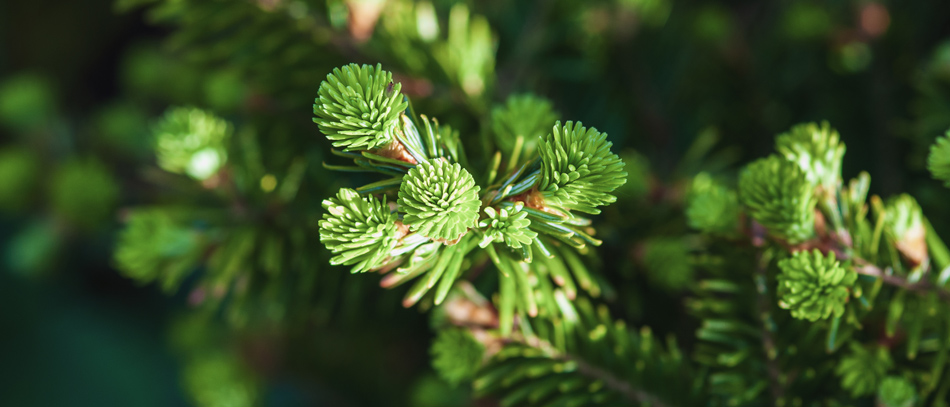
Fir - genus Abies
Most representatives of this genus come from regions with a cool and humid climate. They are usually mountain trees, requiring high air humidity and moderately moist, fresh soils for good development; they do not tolerate drought or heat.
In our climate, most species are characterized by low resistance to severe frosts and spring frosts. Firs grow most beautifully in places with a humid, favorable microclimate, for example, near bodies of water, and in sheltered spots protected from winds (especially easterly ones, which are the most harmful to them).
In Christmas rituals, the fir first appeared as the "podłaźniczka," particularly popular in the villages of Lesser Poland. Most often, these were fir branches attached to a beam placed near the ceiling, decorated with so-called "worlds," which were ornaments made of colorful wafers. This tradition stems from pre-Christian times. In Slavic lands, the podłaźniczka was ceremoniously brought into the house on December 21. According to tradition, it was intended to ensure prosperity for the inhabitants and drive away evil spirits.
Pine - genus Pinus
Pinus includes many species ranging from dwarf shrubs to tall and lofty trees, reaching even 70 m in height (P. ponderosa). Within this genus, there is a division into 3 subgenera determined by, among other things, the internal structure of the needles and the number of vascular bundles.
In the temperate climate, representatives of only two subgenera occur - Pinus and Strobus. The Swiss pine belongs to the subgenus Strobus, and the Scots pine to Pinus. However, all representatives of the genus are connected by a characteristic resinous scent, light-loving nature, and being evergreen. Pines handle unfavorable environmental conditions very well.
Pine appeared in European traditions as early as pagan times. It was then considered a symbol of faithfulness and love, and it was also believed that it strengthened the bodies of the dead with its vitality. It became a symbol of the winter holiday, and in Christian tradition, it survived as the Christmas tree - a tree decorated with ornaments.
Holly - genus Ilex
The Latin name comes from an evergreen species of oak - Quercus ilex L. There are about 400 species of this genus worldwide. Both seasonal and evergreen leaf varieties occur.
The most popular species found in Poland is the English holly, Ilex aquifolium. It usually takes the form of a tall shrub, less often a tree with a conical shape, featuring spiky, evergreen leaves and decorative red fruit.
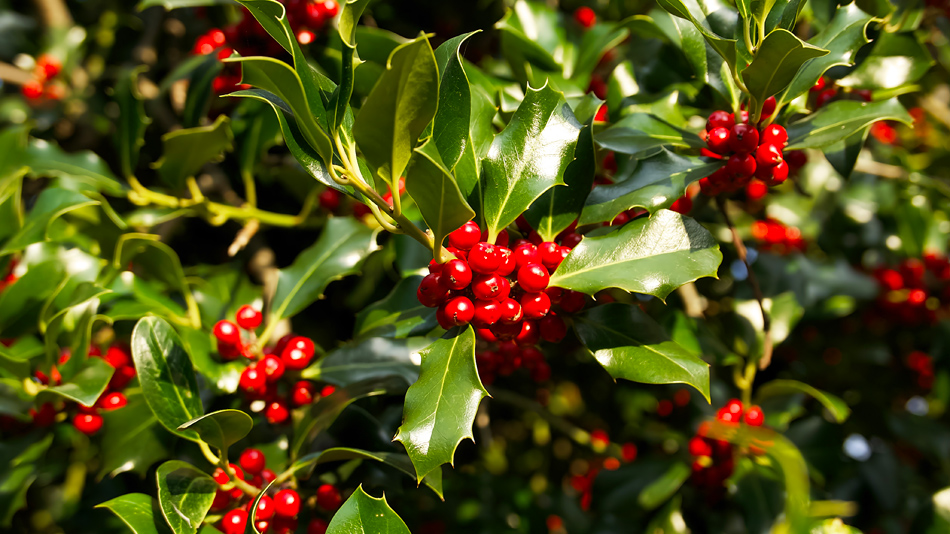
Known already in Celtic culture, where it was dedicated to the gods of light and abundance. According to folk traditions, it was supposed to protect against lightning, wild animals, and supernatural powers. Nowadays, it is a frequent motif in Christmas decorations and works perfectly as a green decoration for balconies, terraces, and Christmas Eve tables.
SOURCES
Żmuda A. J. (1919). Rośliny używane w okresie Świąt Bożego Narodzenia. Sylwan, 37(10-12).
Rotter L. Rośliny–symbole, inspiracje czy pokarm Znaczenie roślin w kulturze ludowej. ZNAK, SYMBOL A RITUÁL V TRADÍCIÁCH A PREJAVOCH ĽUDOVEJ ZBOŽNOSTI, 84.
Wierzbicka A. (2012). Magia, wierzenia a gwarowe określenia roślin. Rozprawy Komisji Językowej, (58), 363-372.
Coelho P. Symbolika religijna i cmentarna wybranych roślin.
Piela A. (2018). Polskie zapomniane frazeologizmy z komponentem mak. Wydawnictwo Naukowe Akademii Ignatianum w Krakowie 2018, 85.
Rusek I. E. (2021). „Jedz, laleczko…", czyli o zaświatowym charakterze niektórych potraw. Bibliotekarz Podlaski, 53(4), 193-206.
Ostrowska-Knapik A. (2018). WIELKANOCNE I BOŻONARODZENIOWE TRADYCJE ŚLĄSKA CIESZYŃSKIEGO. ZAPOMNIANE CZY KULTYWOWANE?. OSTRAVA 2018, 22, 135.
Szcześniak K. (2013). Świerk, drzewo proste. Poznańskie Studia Polonistyczne. Seria Językoznawcza, 20(2), 183-193.