


Keukenhof is a place that inspires awe and is a true mecca for flower lovers from all over the world. This garden in the Netherlands is known as “the most beautiful spring garden” for good reason.
Although it is open for only eight weeks a year, it attracts millions of visitors eager to see endless carpets of colorful tulips, hyacinths, daffodils and many other bulbous beauties.
But Keukenhof is much more than just fields of flowers. Its history goes back centuries, and its modern form is the result of the work and passion of Dutch growers. Get ready for a virtual journey to this extraordinary place as you discover 10 fascinating facts that make a visit to Keukenhof an unforgettable experience.
The world’s largest flower garden
Keukenhof is one of the largest flower gardens in the world, covering an area of 32 hectares.
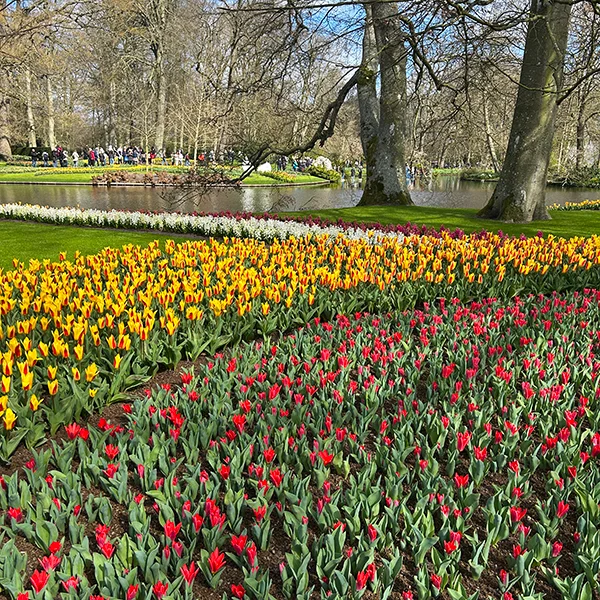
Millions of flowers
Every year, around 7 million flower bulbs are planted here, including tulips, hyacinths, daffodils and many others.
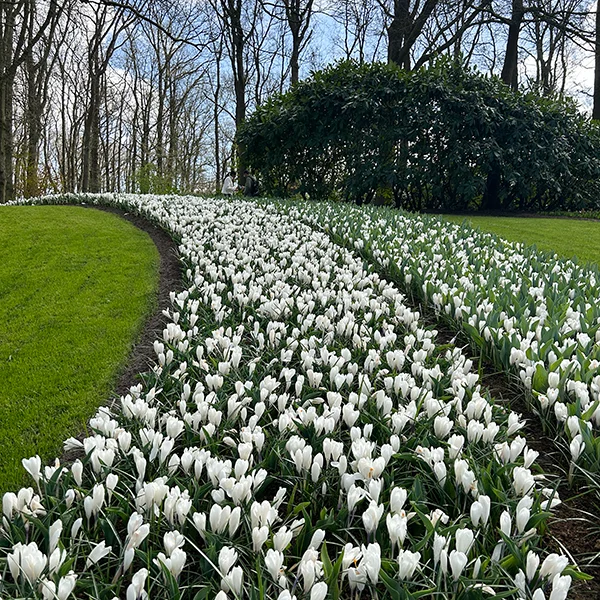
Open for only eight weeks
The garden is open to the public for only about eight weeks in spring, when the flowers are in full bloom.
Its history dates back to the 15th century
The grounds on which Keukenhof is located were part of Countess Jacoba van Beieren’s estate in the 15th century. The name “Keukenhof” literally means “kitchen garden” because herbs and vegetables were grown there for Teylingen Castle.
Founded in 1949
The modern Keukenhof garden was founded in 1949 as an initiative by growers and flower exporters to showcase their products.
Themed gardens and pavilions
In addition to its extensive flower fields, Keukenhof offers a variety of themed gardens, pavilions with flower shows, inspiring displays and demonstrations.
Inspiration for artists
Keukenhof’s beauty has inspired artists, photographers and nature lovers from all over the world for many years.
The “Bloemencorso” flower parade
The famous “Bloemencorso Bollenstreek” flower parade takes place near Keukenhof and attracts crowds of spectators.
Attractions for children
The garden also offers attractions for children, such as a playground, an animal farm and a maze.
Location
Keukenhof is located in Lisse, in the heart of the Netherlands’ flower bulb-growing region, between Amsterdam and The Hague.
Impressive scale and variety of flowers
The fact that Keukenhof covers an impressive area of 32 hectares makes it one of the largest flower gardens in the world.
This extensive space is carefully landscaped to accommodate around 7 million flower bulbs, which are planted every year.
This enormous number and variety of flowers, including more than 800 varieties of tulips, as well as hyacinths, daffodils, lilies and many others, create a spectacular and ever-changing landscape.
Visitors can stroll along 15 kilometers of paths, admiring colorful flower carpets, themed gardens, ponds and pavilions with inspiring displays.
Although Keukenhof is one of the largest flower bulb display gardens, there are other botanical gardens and parks around the world that may be larger in terms of overall area and plant diversity (not necessarily focusing primarily on bulb flowers).
Nevertheless, in terms of the concentration and scale of its spring bulb flower displays, Keukenhof is unrivaled and is widely considered the largest and most beautiful garden of its kind in the world. Its immense scale allows the gardeners to create new, unique displays and themes every year, attracting hundreds of thousands of visitors from all over the world during the mere eight weeks it is open in spring.
Behind the scenes: Planting millions of bulbs
Every year, around 7 million flower bulbs are planted at Keukenhof. This enormous number of bulbs ensures spectacular blooms throughout the garden’s opening period. They represent an impressive variety of species and cultivars. The garden is especially known for its tulips, with more than 800 different varieties planted here. In addition to tulips, a significant number of hyacinths, daffodils, crocuses, lilies, grape hyacinths (muscari) and other bulb flowers and perennials are also planted.
The flower bulbs are supplied by around 100 different growers and exporters. Exhibitors showcase their finest varieties, making Keukenhof a living showcase of the Dutch flower industry.
All 7 million bulbs are planted by hand by a team of around 40 gardeners. This is a huge undertaking that takes about three months, beginning in autumn (usually from October to December), so the bulbs have time to take root before winter.
Keukenhof’s gardeners carefully plan the placement and varieties of bulbs to ensure continuous flowering throughout the garden’s opening period (about 8 weeks in spring). They make use of the different flowering times of each variety and the “layered planting” technique (lasagna planting), in which bulbs with different flowering times are planted at different depths in the same spot. This means the bulbs planted closest to the surface bloom first, followed by flowers emerging from deeper layers.
A new garden design is created each year using different colors and flower varieties. At the end of the season, all the bulbs are dug up, and new ones are planted in autumn according to the latest design. This annual change ensures that Keukenhof always looks fresh and offers new inspiration. These figures highlight the immense scale and careful planning behind the creation of Keukenhof’s spectacular floral display each year.
The history of Keukenhof: From its roots to the present day
The history of Keukenhof dates back to the 15th century. The grounds on which the garden now stretches were part of the extensive estates of Countess Jacoba van Beieren (Jacqueline of Bavaria, 1401–1436), Duchess of Bavaria-Straubing and Countess of Hainaut, Holland and Zeeland. The countess often stayed in this area, where she hunted and gathered herbs for the kitchen of Teylingen Castle, which stood nearby. It is this practice of gathering herbs for the kitchen that gave rise to the name “Keukenhof,” which literally means “kitchen garden.”
Over the following centuries, the estate changed hands several times. Around 1830, the well-known landscape architect Jan David Zocher and his son Louis Paul Zocher were commissioned to design an English-style park around Keukenhof Castle. This design formed the basis of the garden’s layout today.
However, the real turning point in Keukenhof’s history came in 1949. It was then that a group of leading flower bulb growers and exporters came up with the idea of creating a permanent outdoor flower exhibition.
Their aim was to showcase the richness and beauty of Dutch bulb flowers, and to create a place where growers could present their varieties to potential customers.
The founders of Keukenhof included representatives of the flower bulb industry in the Bollenstreek region (the flower bulb-growing region), as well as the mayor of Lisse and other local authorities, who recognized the tourism potential of such an undertaking.
The first exhibition at Keukenhof took place in 1950 and was an immediate success. Since then, the garden has become an annual tradition, opening its gates for about eight weeks in spring, when the flowers are at their most beautiful. Over the years, Keukenhof has expanded, with new themed gardens, exhibition pavilions and other attractions added, becoming one of the most popular tourist attractions in the Netherlands and a world-famous symbol of Dutch floriculture.
Keukenhof’s history combines its 15th-century roots as the countess’s “kitchen garden,” a 19th-century landscape park design, and a 20th-century initiative by flower growers that transformed the site into a world-famous flower exhibition.
Keukenhof pavilions: Flower shows indoors
There are several pavilions within Keukenhof that offer indoor attractions, particularly useful in bad weather or if you want to see special flower shows:
Oranje Nassau Pavilion
This pavilion hosts various themed flower shows throughout the season. Here you can see inspiring floral arrangements, floristry demonstrations and bouquet-making demonstrations. New developments and trends in the world of flowers are also often showcased here. In 2025, the pavilion will host, among other events:
- Freesia and chrysanthemum show (March 27–April 1)
- Rose show (April 3–8)
- Daffodil and special bulb show (April 10–15)
- Alstroemeria and calla lily show (April 17–22)
- Gerbera, daylily and calla lily show (April 24–29)
- Carnation and summer flower show (May 1–11)
Willem-Alexander Pavilion
This is the largest pavilion at Keukenhof, showcasing a variety of cut and potted flowers throughout the season, including an impressive collection of tulips and lilies. Colorful flower and plant shows are also held in this pavilion.
Beatrix Pavilion
This pavilion, with its tropical atmosphere, is home to the famous orchid and anthurium show, which runs throughout Keukenhof’s opening period. Here you can admire rare varieties and artistic displays of these exotic flowers.
Juliana Pavilion
In 2025, this pavilion features the “Keukenhof 75” exhibition, which explores the history of the garden and tulips. It is an opportunity to learn more about the past of this special place.
It is worth checking Keukenhof’s current program before your visit to find out which specific exhibitions and shows will be taking place in each pavilion at that time.
Keukenhof for children: Fun and discovery
Keukenhof offers many attractions that are sure to interest children and make a visit to the garden an unforgettable adventure for them. Children can see and pet various farm animals up close, such as goats, sheep, rabbits and chickens.
Watching animals and being able to interact with them always brings children great joy. The large maze is great fun for the whole family. Children love finding their way out and discovering hidden corners. The Wim het Weesmuis Adventure Trail is a special trail with tasks and challenges for children that leads through different parts of the garden. Children receive a booklet of activities to complete, making the visit an interactive adventure.
Special treasure hunts with prizes for the youngest visitors are sometimes organized. It is worth checking the events schedule before your visit. At one of the windmills, children can see how flour was ground in the past and sometimes even try it themselves. The Whisper Boat Trip—not an attraction specifically for children, but a peaceful boat ride along the nearby canals is a relaxing and interesting experience for the whole family, allowing you to admire the flower fields from a different perspective.
Thanks to its variety of attractions, Keukenhof is a place where adults and children alike can find something to enjoy and spend time together surrounded by beautiful flowers.