


Although we have become accustomed to calling wildflowers weeds, it is worth looking at them from a slightly different perspective. Most of them have been used in culture and medicine for centuries. Some were considered magical plants, while others were commonly used to treat various ailments.
Why do we need weeds?
They have often provided inspiration for artists, and today we are also happy to reach for our cameras to admire wildflower meadows. Their presence is also significant for the ecosystem; they provide shelter and a source of food for wild fauna, and they also help with water retention, preventing droughts. Although they may seem inconspicuous at first glance, they are extremely important for people and nature.
Which weeds were once appreciated?
In the past, various plants were planted around houses, used not only as ornamentals but also for medicinal and cosmetic purposes. Plants with a strong scent, such as common tansy, chamomile, marigold, or lovage, were highly valued. Some of the oldest wild medicinal plants were mullein, helichrysum, and plantain. They were also used as elements of garlands, wreaths, or bouquets accompanying rites.
What do we think about weeds today?
Currently, we still appreciate the health-promoting properties of wild plants. We can find many of them in pharmacies and herbal stores in the form of dried herbs, extracts, as well as in cosmetics, dietary supplements, or food products. It should be remembered that they owe their properties to various chemical substances they contain, which can have both a positive effect on the body and cause undesirable effects, or even poisoning.
Common Dandelion Taraxacum officinale - dandelion, blowball, or hawksbeard?
The common dandelion (Taraxacum officinale) is a perennial belonging to the Asteraceae family.
Depending on the region of Poland, we can encounter various common names such as lion's tooth, blowball, or various regional folk names.
Taraxacum officinale likely originates from Europe, from where it was introduced to other parts of the globe in the warm temperate climate zone. Currently, its range extends from Siberia to the eastern part of Canada and Greenland.
It is most often found in ruderal areas, wasteland, or roadsides. Due to its strong and deep root system, it is sometimes a troublesome weed in home gardens and lawns.
Medicinal properties of the dandelion
Arab physicians were the first to use the medicinal properties of the dandelion in the 10th and 11th centuries to treat spleen, liver, and bladder diseases. An aqueous extract of the plant was used in Mexico to treat diabetes. It is a valuable herb used in Chinese medicine, supporting immunity during the treatment of upper respiratory tract diseases.
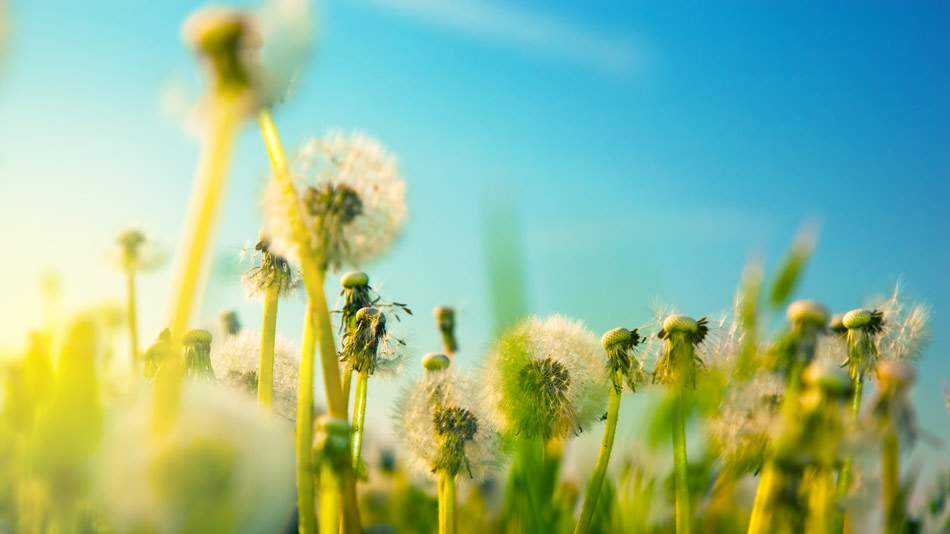
The common dandelion owes its medicinal properties to the chemical substances it contains. Most of them belong to the group of phenols and terpenes.
In addition, along with dandelion products, we can obtain a number of vitamins, minerals, and unsaturated fatty acids. Dandelion leaves are particularly rich in vitamins – the content of vitamin A in them is higher than in carrot roots.
Currently, dandelion flowers are willingly used in the production of wines, cheeses, or syrups and as a caffeine-free coffee substitute. Furthermore, the leaves are particularly valued as an ingredient in dietary and digestion-supporting drinks.
Mullein Verbascum – an ancient Slavic goddess of spring: biology and morphology
Mullein (Verbascum) is a genus of plants belonging to the Scrophulariaceae family. Although the dowry phenomenon is a thing of the past today, the Polish proverb "Where the mullein grows, there is a maiden without a dowry" says a lot about the requirements of mullein, which tends to grow on dry, poor soils that are agriculturally unproductive. Moreover, it prefers open and sunny locations, and it also happens to grow on rocky terrain.
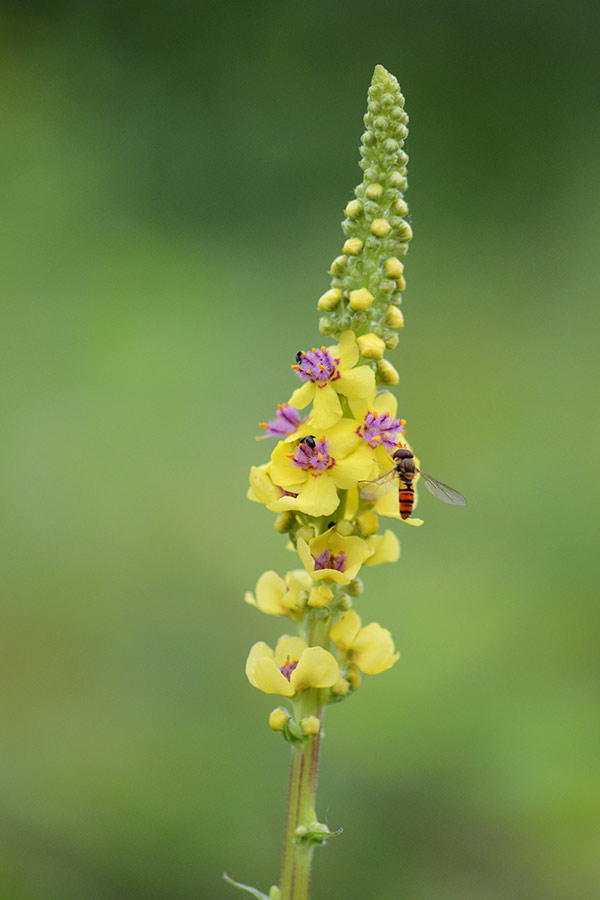
Plants of this genus are characterized by a strong taproot system. In the first year of vegetation, it produces a basal rosette of elliptical leaves; in the second, it creates a long shoot reaching up to 2 m in height with a spike-like inflorescence.
Medicinal properties of mullein
The first mentions of its medicinal properties date back to the chronicles of Długosz.
The plants used in medicine include 3 species of this genus: dense-flowered mullein, woolly mullein, and great mullein. The herbal raw material is the flowers, collected on sunny days from July to September.
In the past, mullein was used to make syrups that facilitated the treatment of chronic inflammatory conditions of the upper respiratory tract. Interestingly, a team of Polish researchers led by A. Slagowska demonstrated the antiviral effect of an infusion of mullein flowers against the herpes virus, and the Zgórniak-Nowosielska team proved the virucidal effect of mullein on influenza A and B viruses.
Common Tansy - biology and morphology
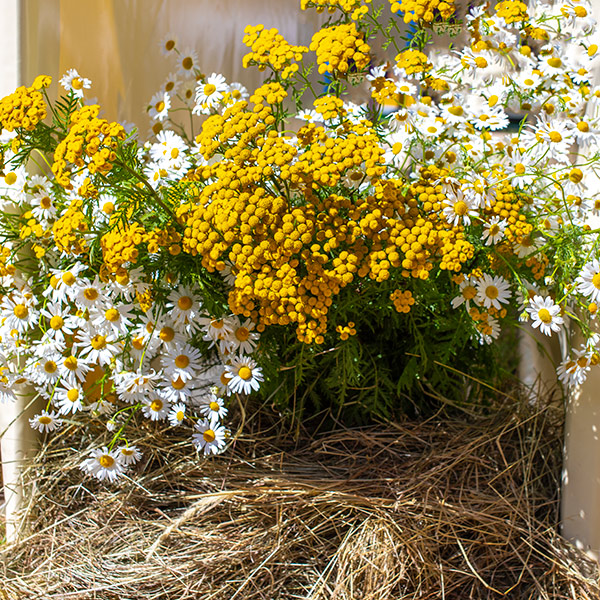
Common tansy (Tanacetum vulgare L.) is a representative of the Asteraceae family, covering Europe and parts of Asia located in the temperate climate zone with its range. As a kenophyte, it also occurs in other areas of the globe, including North America.
Medicinal properties of tansy
Common tansy is characterized by a long and surprising history in medicine and folk culture.
Mentions of it date back to the Middle Ages, where it was commonly used as a spice and ingredient in dishes. It was also used for bruises, sprains, and skin diseases.
Tansy contains thujone in its composition, which shows strongly toxic properties, which is why it is currently used only as an insect repellent, as well as an ornamental plant, eagerly used in naturalistic gardens.
SOURCES
Lis B., Grabek-Lejko D. 2016. Dandelion (Taraxacum officinale) – potential health-promoting properties. Nauka Przyroda Technologie, 10(3), 37.
Wojciechowska A. Mineral content in common tansy (Tanacetum vulgare L.) from different locations.
Zielińska-Pisklak M., Szeleszczuk Ł., Wilczek, K. 2013. Mullein – ancient Slavic goddess of spring. Lek w Polsce, 3.
Mackoś-Iwaszko E., Karczmarz K. 2013. Ornamental plants used in kitchen gardens. Teka Komisji Architektury, Urbanistyki i Studiów Krajobrazowych, 9.
Majdecka-Strzeżek A. 2005. Shaping greenery in rural areas. Home gardens-tradition, future. Landscape Architecture.