


Where does bamboo come from?
Bamboo (Bambusa Shreb.) is a genus of perennial plants originating from Asia. It belongs to the grass family (Poaceae).
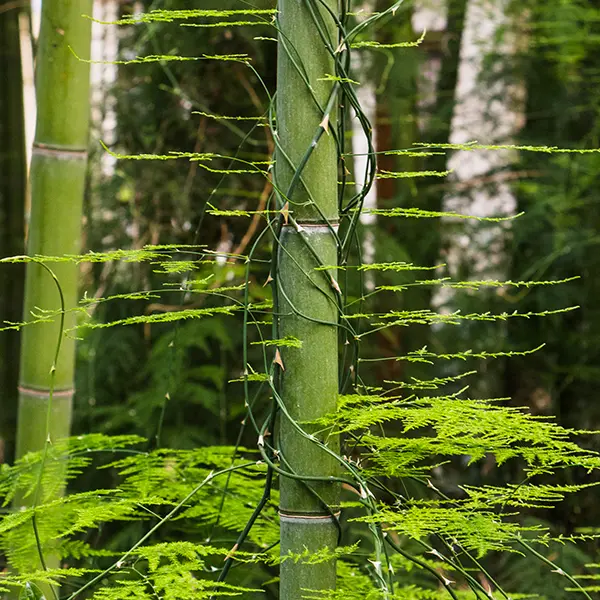
The bamboo genus includes 146 species of varying growth habits, reaching heights of up to 20 m. In their native habitats, they form the understory of tropical and subtropical forests.
What is bamboo used for?
In Asia, bamboos are used as a building material characterized by high durability.
It has been used for making simple fishing rods or plant supports. Nowadays, bamboo products enjoy great popularity as interior furnishings. In furniture stores, we can find bamboo ceiling lamps, laundry baskets, chairs, or bathroom containers.
What are the soil requirements of bamboo?
Bamboos are among the least demanding houseplants. Due to the fact that they grow quickly, they need large pots. It is also necessary to ensure an appropriate soil pH, which should be between 5.5 and 6.2. The soil for growing bamboo should be rich in humus and humic compounds. One should also ensure a drainage layer of adequate thickness, which should be about ¼–⅕ of the height of the pot.
What is humus and how are humic acids formed?
Humus is formed from dead organic matter in the process of humification. The best humus is created from fallen leaves, dried grass, and plant fragments.
Humification consists of two stages:
In the first stage, decomposition and rotting of dead organic matter occurs.
In the second stage, humic compounds and humic acids are formed from the decomposed matter through synthesis.
The amount of humic compounds determines soil fertility.
Bamboo in a pot – see how to grow it!
Now that you know the requirements of bamboo, find out how best to prepare for growing it.
The first step is to ensure an appropriate pot. Bamboo is a fast-growing plant, so it will require a sufficiently large and deep container. It should also be equipped with a drainage outlet for excess water.
The second step to growing a healthy bamboo is ensuring proper hydration. The substrate should be constantly moist. It should not be allowed to dry out.
You should avoid spraying water on the bamboo leaves, as this can lead to the development of fungal diseases. It is good for the air humidity to be around 80%. A humidifier will work well for this purpose. Alternatively, we can use a saucer or a large plate filled with water placed near the plant.
Bamboo in the garden, is it safe?
Garden bamboo has been a hit in recent years. Due to its fast growth, frost resistance, and aesthetic appearance, it is eagerly used in home gardens, allotments, or in urban greening. Bamboo is sometimes used for hedging or around ponds and water features.
It is worth noting that it is an alien plant to our biosphere. Bamboo is characterized by high expansiveness, which means that uncontrolled, it quickly spreads and takes up a large space. It can displace other species in the process. Additionally, the varieties used for planting are frost-resistant, so any potential control of excessively overgrown bamboo may have to be done mechanically or by chemical methods.
Plants with a similar growth habit are Japanese knotweed and giant knotweed, which were brought to Europe as ornamental plants. Today, they are among the most dangerous invasive plants, the control of which consumes huge funds and effort.
Or perhaps a compromise? See how to grow bamboo on a balcony and terrace
However, if we want to grow bamboo in Poland, it is worth choosing to grow it in containers. Thanks to this, we will partially limit the danger associated with uncontrolled bamboo growth. Let us remember to also secure the bamboo plant remains. They should be thoroughly composted or burned.
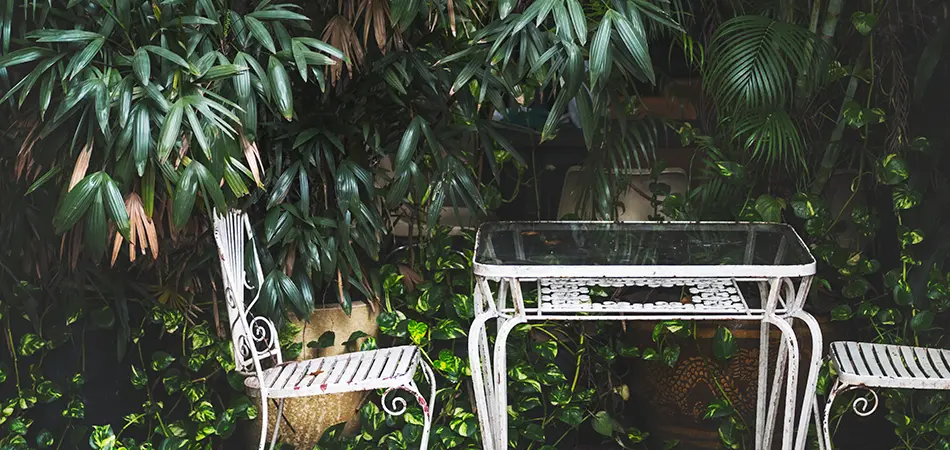
Bamboo on a balcony is a great way to add greenery to this part of the house. Bamboo can work perfectly as a green screen partitioning a terrace or covering a balcony.
Is bamboo frost-resistant?
Yes, bamboo is frost-resistant, although bamboo slows down its growth in winter, most varieties used in gardens remain evergreen.
Frost-resistant bamboo species and varieties include:
- Fargesia rufa,
- Fargesia robusta 'Campbell',
- Fargesia denudata,
- Fargesia nitida,
- Phyllostachys bissetii,
- Phyllostachys aureosulcata 'Spectabilis',
- Phyllostachys aureosulcata 'Aureocaulis',
- Phyllostachys vivax 'Aureocaulis'.
How fast does bamboo grow?
It is difficult to answer this question unequivocally. Bamboos, like any plant, need appropriate air and substrate humidity parameters, soil richness, or a sufficiently large space and little competition for optimal growth.
The rate of growth is also influenced by the species and variety of bamboo, however, it is generally believed that they are fast-growing plants. To illustrate, woody bamboos covering the tropical forests of Asia can grow up to 1 m per day.
SOURCES
Svec J., Necas M., Sindelar, V. (2010). Bambus [6] uril. Angewandte Chemie International Edition, 49(13), 2378-2381.
Ruggiero M. A. et al. (2015) A Higher Level Classification of All Living Organisms, „PLOS One", 10 (4), art. no. e0119248.
Stevens P.F. Angiosperm Phylogeny Website, Missouri Botanical Garden.